Washing Machine Leaving Black Marks on Clothes? Causes and Repair Guide
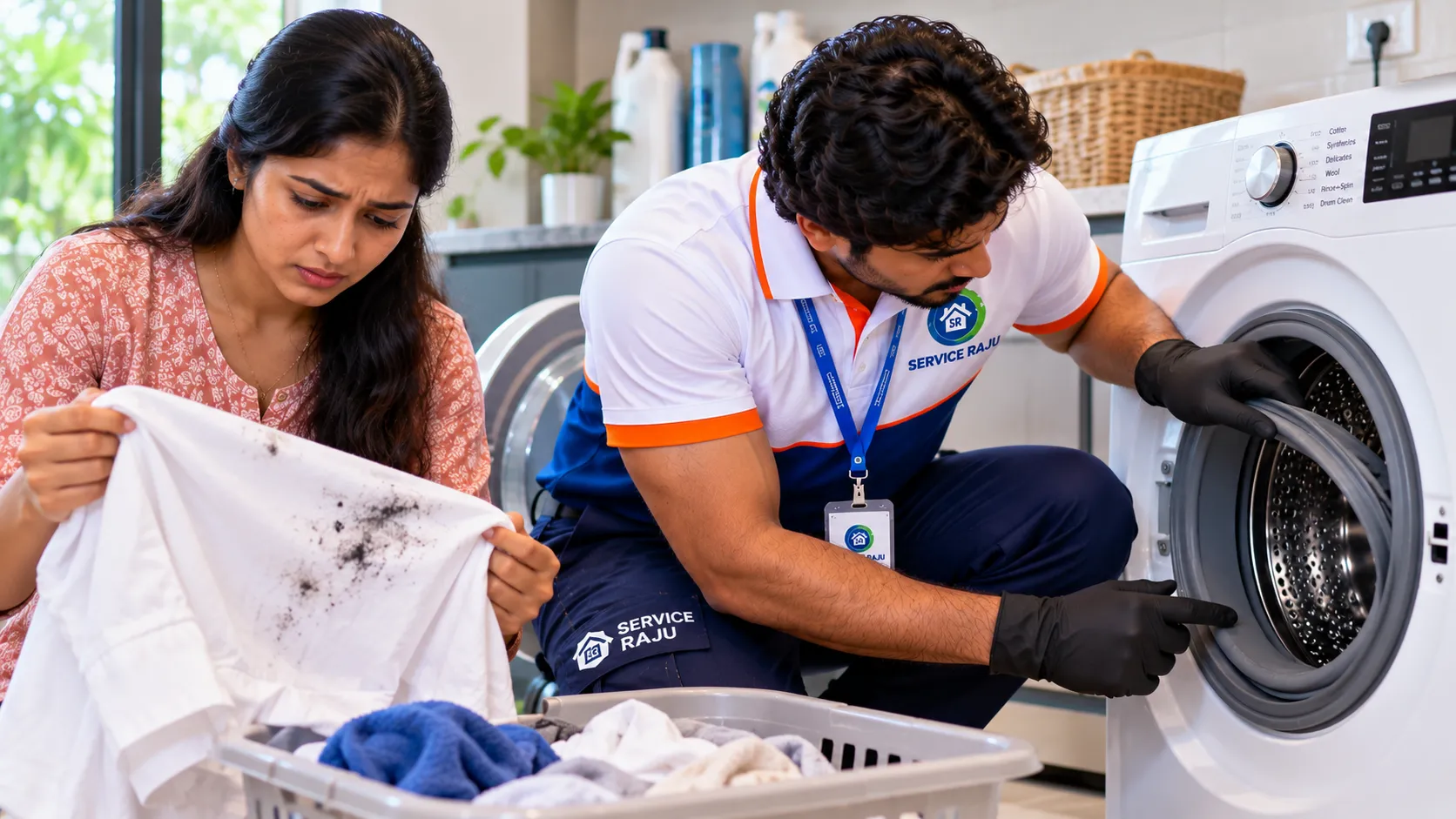
You take your clothes out of the washing machine expecting them to be clean—but instead, you notice black marks, dark smudges or greasy-looking streaks. If this keeps happening, it is frustrating and may leave you wondering whether the machine is dirty, the detergent is unsuitable or a component needs repair.
Black marks can have several causes. They may come from detergent or fabric-softener residue, dirt trapped in accessible parts of the machine, contamination around a door gasket, or a mechanical problem. Sometimes, the mark may not come from the washing machine at all.
This guide explains what to check safely, how to narrow down the likely cause, and when to book a washing-machine inspection in Mysore (Mysuru).
Quick Answer: What Should You Check First?
- Pause washing loads that continue to develop marks. Check the garment and the machine before washing more clothes.
- Look for residue around accessible detergent compartments, the door seal or gasket, and other areas described in your machine's manual.
- Check whether the marks appear on different garments, in different loads or only on one item.
- Review detergent amount, fabric-softener use and the washing programme. Follow the appliance manufacturer's instructions.
- If marks persist after appropriate cleaning, or the machine has unusual noise, leakage, burning smells or visible damage, stop using it and arrange an inspection.
Safety first: Before cleaning accessible parts, switch the machine off and unplug it if the manufacturer's instructions permit. Do not reach into a moving drum, remove panels or attempt electrical or mechanical repairs yourself.
What Do the Black Marks Look Like?
The appearance and pattern of the marks can help you decide what to inspect next, but they do not prove a particular fault.
| What you notice | Possible clue | What to do next |
|---|---|---|
| Dark smudges or streaks on several items | Residue or contamination may be transferring during the wash. | Inspect accessible areas and review detergent use. |
| Marks concentrated near folds or thick fabric areas | Residue may be trapped in the load, or the marks may have another source. | Check the garment and try to identify whether the mark was present before washing. |
| Marks appear mainly on one garment | The garment, a pocket item or a stain already on the fabric may be involved. | Inspect the item and other clothes from the same load before blaming the appliance. |
| Dark residue visible around an accessible seal or compartment | Accumulated lint, detergent or other material may need cleaning. | Clean only as directed in the owner's manual. |
| Marks continue after cleaning, or the machine has unusual sounds or leakage | A deeper contamination or mechanical issue may need professional assessment. | Stop repeated test washes and arrange an inspection. |
Common Causes of Black Marks on Clothes After Washing
1. Detergent or fabric-softener residue
Using more detergent or fabric softener than the machine and load require can contribute to residue. Product may not rinse away as expected under some washing conditions, and residue can collect in accessible compartments or on laundry.
Use the product's recommended amount and the dose guidance in your washing-machine manual. Do not assume that adding extra detergent will make clothes cleaner.
2. Dirt or buildup in accessible machine areas
Lint, detergent deposits and other material can accumulate in parts of a washing machine that are intended to be cleaned or maintained. If residue is disturbed during a wash, it may transfer to clothing.
Check only the user-accessible areas described by the manufacturer, such as a removable detergent drawer or accessible seal surfaces. The exact maintenance procedure differs by model.
3. Contamination around a front-load door gasket
Front-load machines have a rubber door gasket or seal. Moisture, lint and residue may remain in its folds if the area is not maintained according to the manual. Inspect the accessible folds for debris, damage or unusual deposits.
Do not pull, cut or dismantle the gasket. If it is torn, distorted or appears to have material trapped behind it, arrange a technician's assessment.
4. An unsuitable washing or maintenance routine
Repeated low-temperature or short cycles may not suit every detergent, load or maintenance need. However, a particular cycle is not a guaranteed fix for black marks. Follow the manufacturer's recommended cleaning or maintenance cycle, if one is provided, and use only approved products.
5. A possible mechanical or component issue
If marks continue despite sensible cleaning and correct product use, a technician may need to check whether a component is damaged, contaminated or contacting the laundry in an unintended way. The cause cannot be confirmed from the appearance of a stain alone.
Do not assume that a drum, bearing, seal or other part must be replaced before the machine has been inspected.
6. The mark may not be coming from the washing machine
Oil, cosmetics, food, pocket contents, colour transfer or stains already on clothing may become more noticeable after washing. Compare the affected item with other garments from the same load and inspect pockets before concluding that the appliance is responsible.
Safe Checks You Can Do at Home
These checks may help narrow down the issue without opening the machine. Follow your appliance manual, and stop if a step is not intended for users.
Check 1: Compare more than one load
Note whether the marks occur on several garments or only one. If the issue appears repeatedly across different loads, the machine deserves closer attention.
Check 2: Inspect the clothes before washing
Look for existing stains, residue, loose items in pockets or colour transfer. If possible, photograph the marks before attempting stain removal.
Check 3: Review detergent and softener use
Check the product label and your machine's manual for dosage and dispenser instructions. Avoid overfilling the drawer or adding products to compartments not intended for them.
Check 4: Inspect accessible areas
With the machine off and safely disconnected as directed by the manual, look at the accessible detergent drawer, visible drum surface and front-load door gasket if your model has one. Note any residue, debris, tears or unusual deposits.
Check 5: Look for other warning signs
Pay attention to unusual grinding or scraping noises, water leaks, burning smells, error codes or visible damage. These signs are reasons to stop using the machine and seek professional help.
How to Clean Accessible Washing-Machine Residue
If the owner's manual provides a cleaning procedure, follow it exactly. A general maintenance approach may include:
- Removing and cleaning a detachable detergent drawer only if the manual permits it.
- Wiping accessible gasket surfaces with a suitable cloth and the cleaner recommended by the manufacturer.
- Removing visible lint or debris from user-accessible areas without pushing it deeper into the machine.
- Running the manufacturer's recommended maintenance or drum-cleaning programme when appropriate.
- Leaving the door or lid open after a wash only if the manufacturer recommends this and it can be done safely.
Do not mix cleaning chemicals. Never combine bleach with acidic cleaners or ammonia-containing products. Avoid abrasive tools and unapproved chemicals that could damage the drum, seal or finish.
Cleaning an accessible area may help if residue is the cause. It will not repair a damaged component or resolve every possible source of staining.
When Should You Book Washing-Machine Repair?
Arrange a professional inspection if:
- Black marks keep appearing after you have checked the laundry and followed the machine's approved cleaning procedure.
- You find damage, a tear or a persistent deposit in an accessible seal or other user-maintenance area.
- The machine makes unusual grinding, scraping or knocking sounds.
- You notice leakage, burning smells, electrical concerns or repeated error codes.
- You are unsure how to clean a part safely or the suspected source is behind a panel.
If you notice a burning smell, electrical issue, significant leakage or unsafe operation, switch off the appliance and disconnect it only if you can do so safely. Do not continue running test cycles.
What May a Washing-Machine Technician Inspect?
The technician's inspection should be guided by the machine's model, the pattern of the marks and any other symptoms. Depending on the findings, the assessment may include:
- Accessible drum, detergent drawer and gasket condition.
- Whether the marks are consistent with residue transfer or another source.
- Visible wear, damage or abnormal contact involving relevant parts.
- Other reported symptoms, such as unusual noise, leakage or an error code.
- Whether cleaning, a repair, a replacement part or further diagnosis is justified.
Ask the technician to explain the finding and recommended work before approving a repair. A stain by itself is not enough to establish that a particular component has failed.
Washing Machine Repair in Mysore: Book an Inspection
If your washing machine is repeatedly leaving black marks on clothes, a proper inspection can help identify whether the issue is related to residue, accessible buildup, a damaged part or something outside the appliance.
Before booking, note the washing-machine brand and model, whether it is front-load or top-load, when the marks began, and whether the machine has any other symptoms. If you can, keep a photo of the affected clothing and the visible residue.
Need help with a recurring washing-machine problem? Contact Service Raju to check service availability and arrange a washing-machine inspection in Mysore.
Book Washing Machine Repair with Service Raju
Explain that the machine is leaving black marks on clothes and ask what inspection or diagnostic charges apply before confirming the appointment.
Frequently Asked Questions
1. Why is my washing machine leaving black marks on clothes?
Possible causes include detergent or fabric-softener residue, dirt or buildup in accessible machine areas, contamination around a gasket, a mechanical issue or a stain that was already on the garment. The cause needs to be narrowed down rather than assumed.
2. Can detergent cause black marks after washing?
Excess detergent or fabric softener can contribute to residue under some conditions. Follow the product label and your washing-machine manual, and check whether the dispenser or other accessible areas need maintenance.
3. How do I clean the washing-machine drum?
Use the maintenance or drum-cleaning procedure recommended for your exact model. Do not add unapproved chemicals or combine cleaners. A drum-cleaning cycle may help with maintenance, but it may not fix a mechanical fault or every source of staining.
4. Could the rubber gasket cause black marks?
Residue or debris around a front-load gasket may be worth checking. Inspect only accessible folds and surfaces as directed by the manual. If the seal is damaged or the source appears inaccessible, arrange a technician's inspection.
5. Should I keep washing clothes to see if the marks disappear?
If marks keep recurring, pause and inspect the machine and laundry. Repeated test washes may stain more items and will not reliably identify the cause.
6. Do black marks mean the drum or bearings need replacement?
No. Black marks alone do not prove that the drum, bearings or any specific part has failed. A technician should inspect the machine and explain the evidence before recommending parts.
7. When should I stop using the washing machine?
Stop using it if you notice burning smells, electrical concerns, significant leakage, unusual grinding or scraping noises, visible damage or unsafe operation. Disconnect it safely and arrange professional help.
8. Can Service Raju repair a washing machine leaving black marks?
Service Raju provides washing-machine repair booking through its service page. Contact the team to confirm availability in your area, explain the symptom and ask about inspection or diagnostic charges.
9. What information should I give the technician?
Share the brand and model, machine type, when the marks began, whether they appear on multiple loads, any visible residue, and any other symptoms such as noise, leakage or error codes.
10. Can I remove the black marks from clothes after washing?
That depends on the fabric and what caused the stain. Check the garment's care label and identify the stain before using a treatment. Avoid heat or harsh chemicals until you know whether they are suitable, because they may set or damage some stains.
Conclusion: Find the Cause Before Replacing Parts
Black marks after laundry can be caused by residue, buildup, a garment-related stain or a machine problem. Compare affected loads, review detergent use and inspect only the accessible areas described in your manual. If the marks continue—or the machine shows other warning signs—book an inspection instead of repeatedly washing and hoping the problem disappears.
Book a Washing-Machine Inspection with Service Raju and describe the black marks, your appliance model and any additional symptoms.
 AC Repair
 Ant Control Service
 Basin & Sink Services
 Bath & Shower Services
 Bath Fittings & Mirrors
 Bathroom Cleaning Service
 Bathroom Renovation Services
 Bed Bug Control Services
 Bedroom Painting
 Book a Carpenter Consultation
 Book Electrical Consulting
 Cabinet Painting & Wood Refinishing
 Chimney Cleaning
 Civil Masonry Work
 Clean-Up Services
 Clothes Hanger Installation
 Cockroach Control Services
 Commercial Cleaning
 Commercial Pest Control AMC Service
 Cupboard & Drawer Services
 Decorative Wall Panels
 Deep Sanitisation Service
 Detan & Bleach
 Door, Grill & Cabinet Painting Service
 Doorbell & security
 Drain Blockage Clearing
 Electrical Appliance Services
 Electrical Wiring Services
 Empty Home Deep Cleaning
 Fabrication
 Facials
 Fan Installation & Repair
 Full Home Cleaning Service
 Full Home Renovation
 Furniture Repair Service
 Gas Stove & Hob Repair
 General Pest Control Services
 General Plumbing & Consultation
 Geyser Repair
 Glass Cleaning
 Head Massage
 Honeybee & Wasp-Services
 Kitchen & Bathroom Painting Service
 Kitchen Cleaning
 Kitchen Fittings
 Kitchen Renovation
 Laptop/Desktop service
 Leak Detection and Repair
 LED TV Repair
 Living and Dining Room Painting
 Makeup, Saree & Styling
 Manicure & Pedicure
 MCB,Meter & Fuse Services
 Microwave Repair
 Mosquito Pest Control Service
 Multi-Room Painting Service
 Painting Consultation
 Quick Mini Cleaning Services
 Refrigerator Repair
 RO Water Purifier
 Rodent Control Services (Rat & Mice Treatment)
 Rooms Cleaning
 Shelves & Decor
 Sofa, Carpet & Mattress Cleaning
 Solar Water Heater Service
 Sump & Tank Cleaning
 Switch & Socket Services
 Tap & Mixer Service
 Termite-Control-Services
 Threading & Face Wax
 Tile & Granite Installation & Polishing
 Toilet & Commode Services
 UPS and Inverter Repair Services
 Wall Painting Service
 Washing Machine Repair
 Water Level Controllers
 Water Tank and Pump Repair
 Waterproofing
 Waterproofing Services
 Waxing
 Window & Curtain Services
 Wooden Door Services